
All About
Elderberry (Sambucas Nigra)
Overview
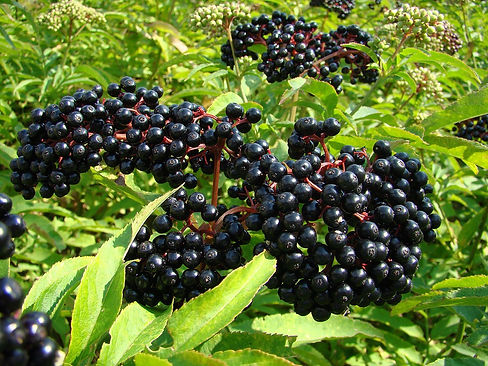
Sambucus nigra is native to most of Europe and has the common names including: elder, elderberry, black elder, European elder, European elderberry, and European black elderberry. It grows in a variety of conditions including both wet and dry fertile soils, primarily in sunny locations. The plant is widely grown as an ornamental shrub or small tree.
Habitat
Elderberry is a deciduous shrub or small tree growing to 20 ft tall and wide. Sambucus nigra is native to Europe as far east as Turkey. It is native in, and common throughout, the British Isles. It has been introduced to parts of most other continents of the world. Hedges, waste-ground roadsides, and woods are the typical habitats for the species. Elderberry is recorded as very common in Ireland in hedges as scrub in woods.


History
Both the flowers and the berries have a long tradition of culinary use, primarily for cordial and wine. Although the plant is commonly used in dietary supplements and traditional medicine. has a rich history spanning thousands of years, utilized by ancient civilizations and Indigenous cultures for its medicinal, culinary, and magical properties. Often hailed as a "medicine chest" by Hippocrates, it was used for immune support and various ailments. Historically, it was associated with protection and folklore, and in modern times, it is cultivated for its berries and flowersThroughout history the plant has been used for wine, brandy, liqueur or mild elderflower "Champaign".
Medicinal
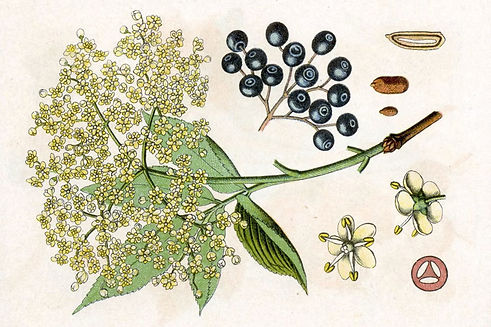
Elderberry (Sambucus nigra) is widely recognized for its high antioxidant, antiviral, and immune-boosting properties, commonly used to reduce the severity and duration of colds and influenza. Rich in anthocyanins, flavonols, and vitamins A and C, it reduces oxidative stress and inflammation, with potential evidence for supporting heart health and treating respiratory infections.

Overview of
Medicinal Properties
-
Antiviral and Antibacterial: Studies suggest elderberry may inhibit viruses, particularly influenza, by preventing them from entering cells.
-
Respiratory Health: Used traditionally to treat sinus infections, colds, and bronchitis.
-
Other Potential Uses: It has been used for managing constipation (acting as a laxative) and to promote diuretic effects.
-
Immune System Support: Elderberry is packed with compounds that boost immune function and can reduce flu symptoms (like fever, headache, and congestion) when taken within 24-48 hours of onset.
-
Antioxidant Power:
High levels of anthocyanins and phenolic acids help neutralize free radicals, reducing oxidative stress and inflammation